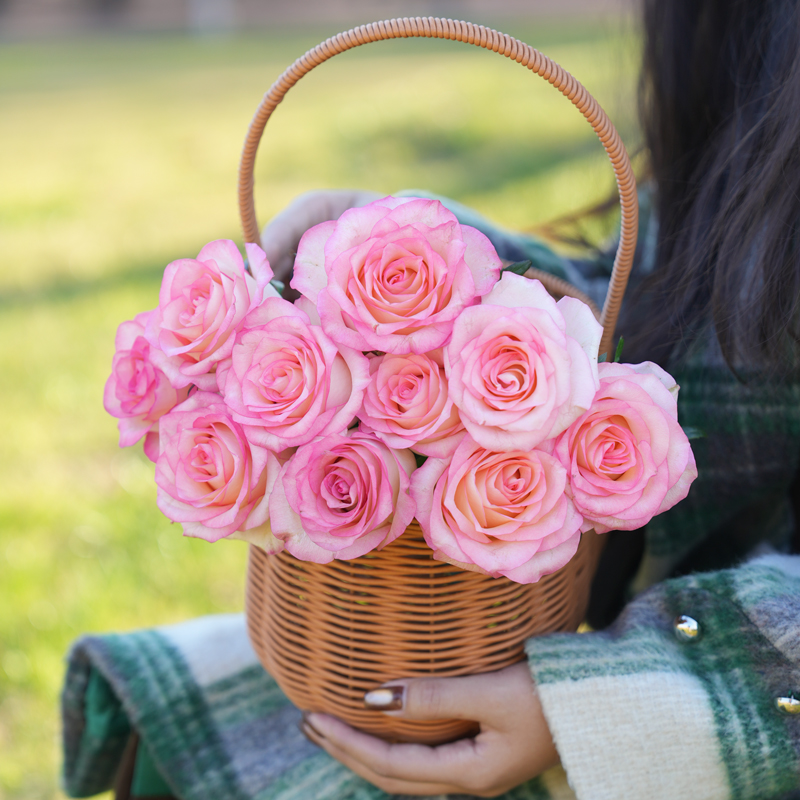
He is a “niche” player in the field of embossing, breathing new life into traditional patterns through flowers and leaves. Picture
“Spring flowers and autumn leaves will eventually wither, but the art of flower pressing can preserve these ephemeral beauties for as long as possible. After being refined by artists, they are endowed with deeper cultural connotations,” Yang Adan (real name Hu Xueyang) told China Flower Industry News. “Transforming the transient into the eternal and the decayed into the miraculous is precisely what attracts me most about flower pressing.”
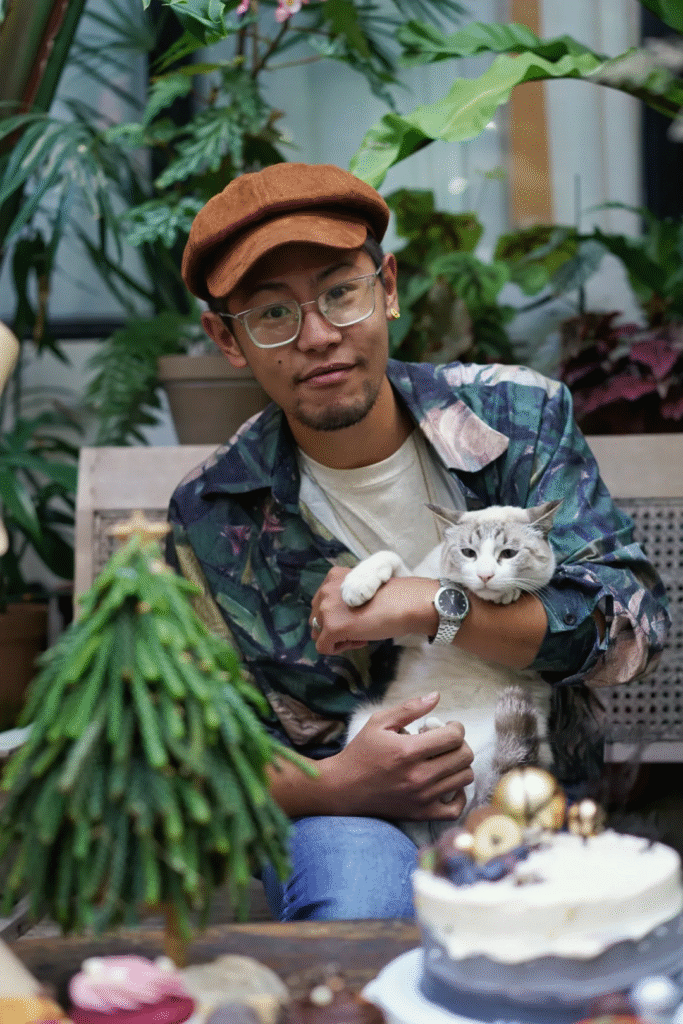
Yang Adean
1,Deeply explore traditional Chinese patterns
Five years ago, Yang A’dan’s journey with pressed flowers began in Dali, Yunnan. At that time, due to work requirements and personal interest, he had his first encounter with pressed flowers. Later, as the company expanded its product line, he was engaged in the making of plant specimens for a period of time. “The making of specimens and today’s pressed flowers differ significantly in style and technique. However, this experience opened the door to the art of pressed flowers for me and led me onto this unique path.”
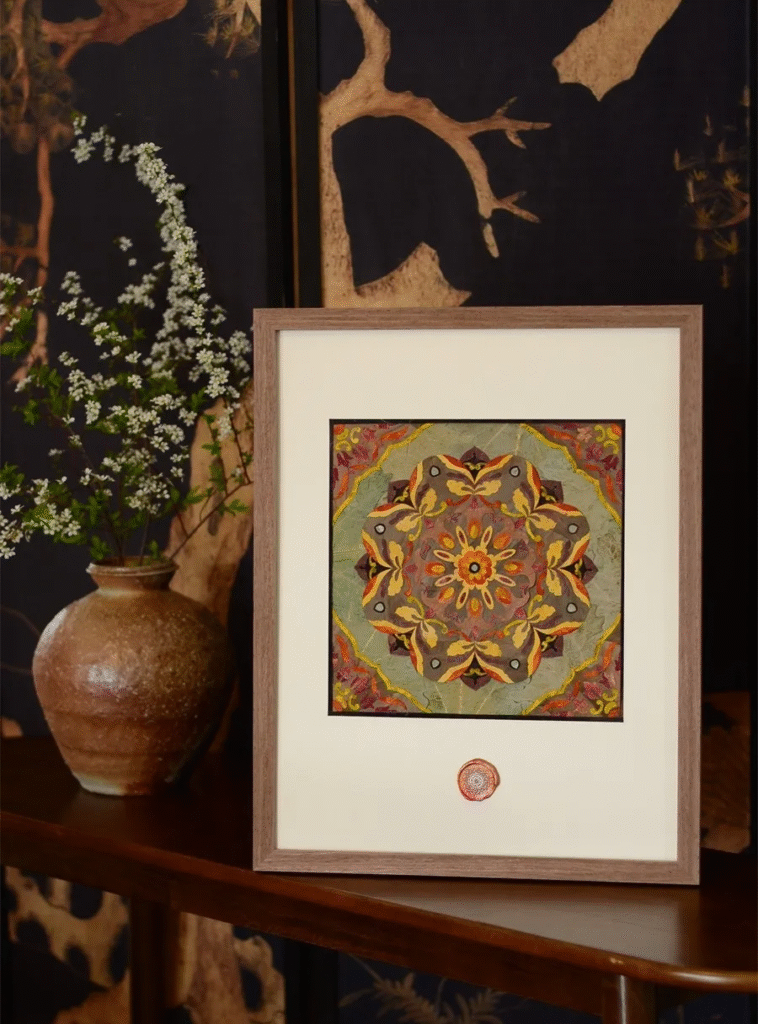
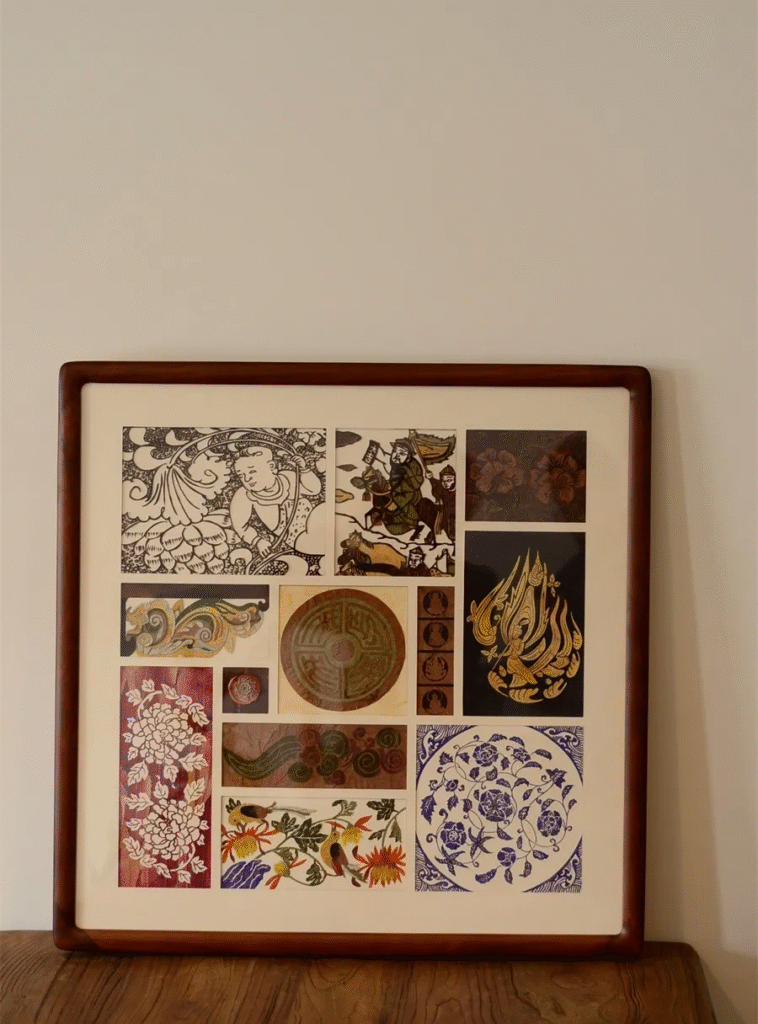
Nowadays, Yang Ade’s creative focus is on the traditional Chinese pattern series of pressed flowers. There is little mature experience to draw on in this field in the world of pressed flowers, so he can only rely on his imagination and understanding to “feel his way across the river” through repeated trial and error. Therefore, the techniques he uses are mostly self-researched by consulting materials and constantly practicing, summarizing and generalizing.
Longmen Grottoes Lotus Cave + Mogao Grottoes Cave 321 Ceiling Mural.jpg
Most of Yang Adan’s works are inspired by museums and various cultural heritage sites across the country. For instance, his first traditional pattern work was inspired by the relief carvings on the ceiling of the Lotus Cave in Longmen Grottoes. “In fact, in traditional Chinese patterns, there is a vast branch that originates from flowers, plants and trees, that is, the diverse and changeable plant patterns, such as peony patterns, lotus petal patterns, passionflower patterns, magnolia patterns, honeysuckle patterns… It can be said that although my works are not traditional sense of pressed flowers, both in material selection and design foundation, they have been infinitely nourished by natural flowers.” Yang Adan introduced.
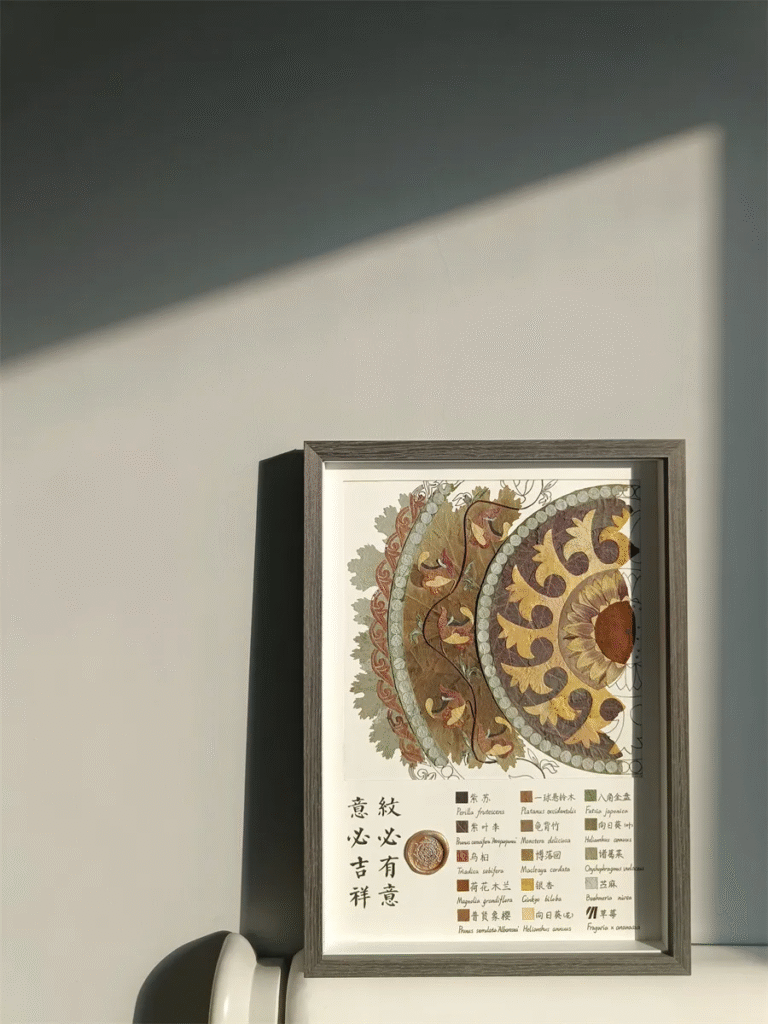
Jingdezhen Yuan Dynasty Blue and White Porcelain Plum Vase with Scroll Pattern of Peony Flowers.jpg
The “Every Pattern Has a Meaning, Every Meaning Brings Good Fortune” series of works has gained wide popularity for its distinct style. Yang Ade said that compared to grand narratives, expressing the beautiful expectations for secular life is what he excels at. Currently, all the works in this series are custom-made one-to-one, and each piece carries the expectations of the clients: there are wishes for newlyweds to have “an endless stream of blessings and good things in pairs”; there are expectations for the first birthday babies to “grow freely and have everything go well”; there are wishes for career success to “ascend rapidly and reach great heights”; and there are blessings for elders to “live as long as the mountains and enjoy continuous good fortune and prosperity”. He said, “The traditional Chinese patterns that have been passed down for thousands of years are the concrete expressions of the generations’ aspirations for a more fulfilling life and greater prosperity.”
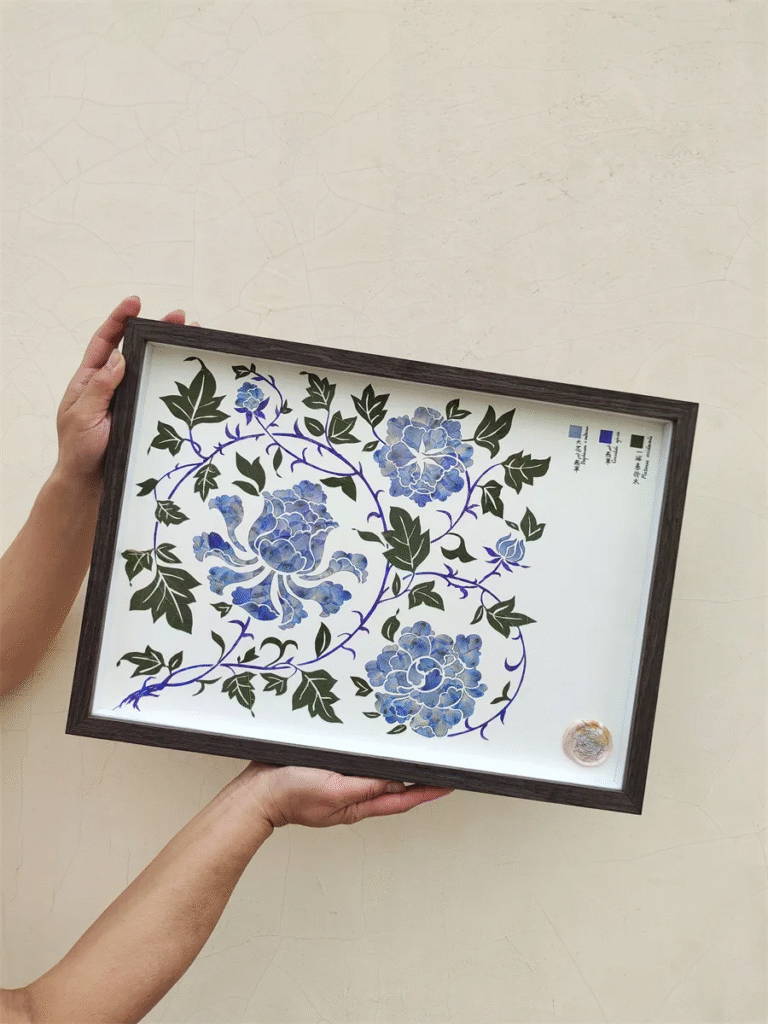
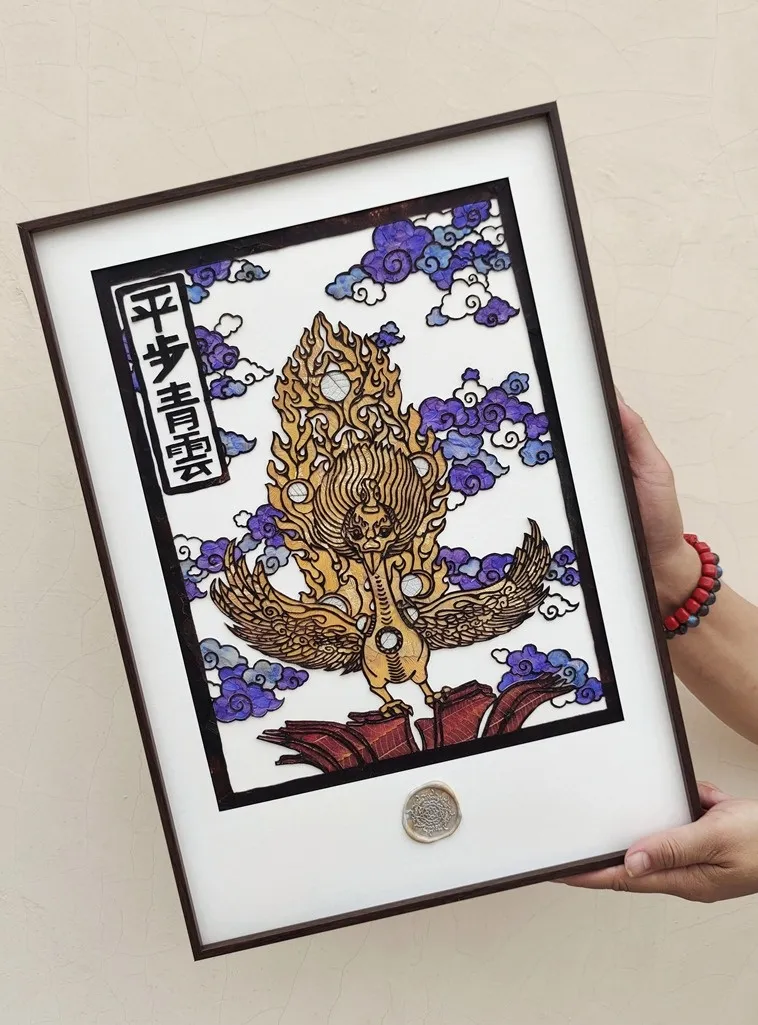
When asked about the work with the most special significance, he mentioned the design he made for a friend in Chengdu – which incorporated elements from the gold-inlaid flower-and-bird copper mirror in the collection of the Luoyang Museum and the Sun God Bird gold foil in the collection of the Jinsha Site Museum in Chengdu. “This work retains the sunflower-shaped outline, the alternating pattern of four phoenixes holding ribbons and flowers of the copper mirror, as well as the image of the golden crow and the sun pattern of the Sun God Bird gold foil. I deliberately replaced the original flowers in the copper mirror with the city flower of Chengdu, the hibiscus. To me, this design is the best testimony to the friendship between Chengdu and Luoyang.”
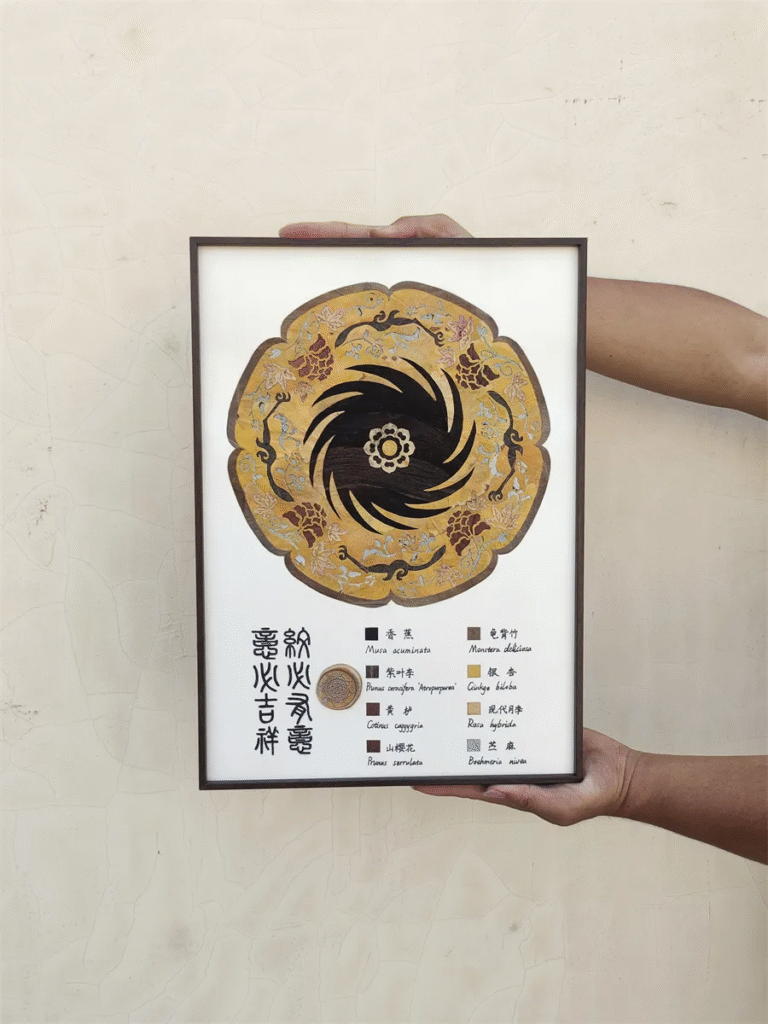
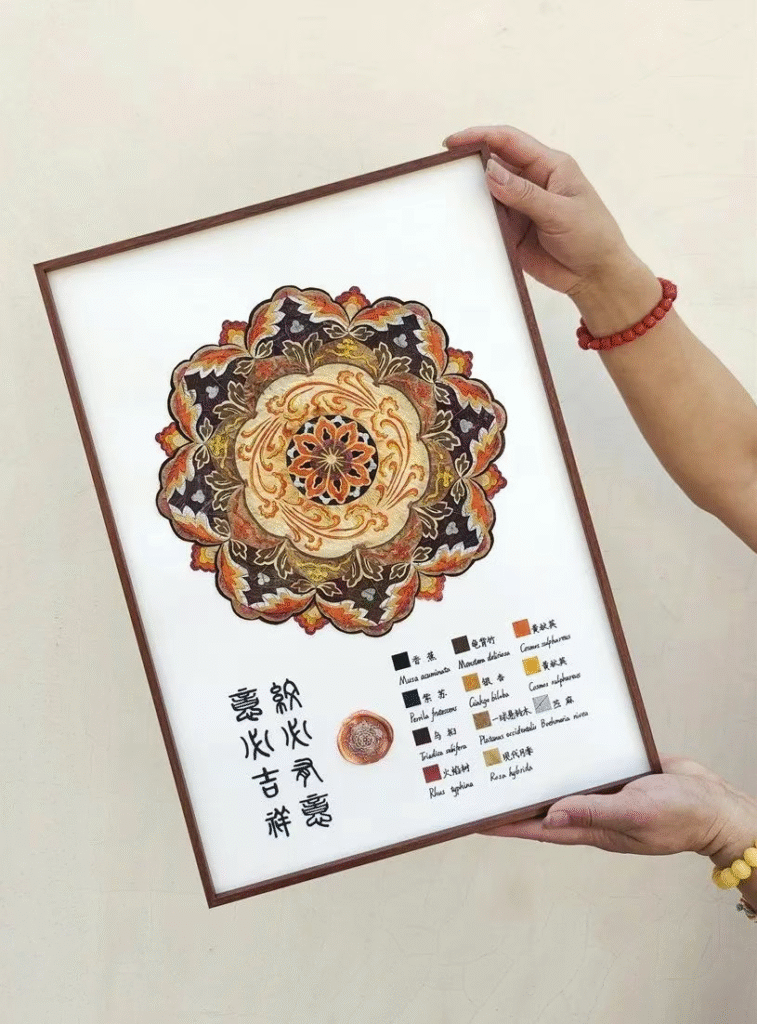
Among Yang A Dan’s traditional pattern series works, the most popular ones are several peonies.
The flower of the Tang Dynasty, known as the “baoxianghua”, is an ideal flower that flourished during the prosperous Tang era. It does not exist in reality but is a complex pattern composed of a series of individual patterns such as peony, lotus petal, honeysuckle, pomegranate, grape, and linked pearl. Perhaps it is precisely because it represents the openness and inclusiveness of the Tang people and its circular outline is very much in line with the Chinese preference for completeness that this series of works is more favored.
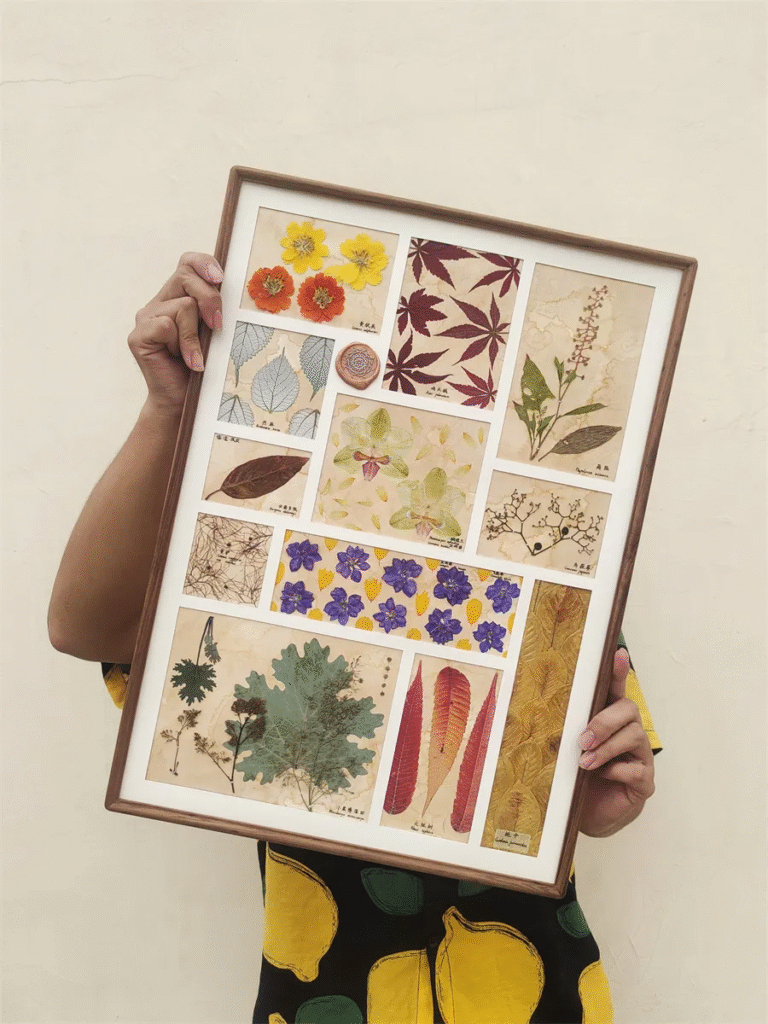
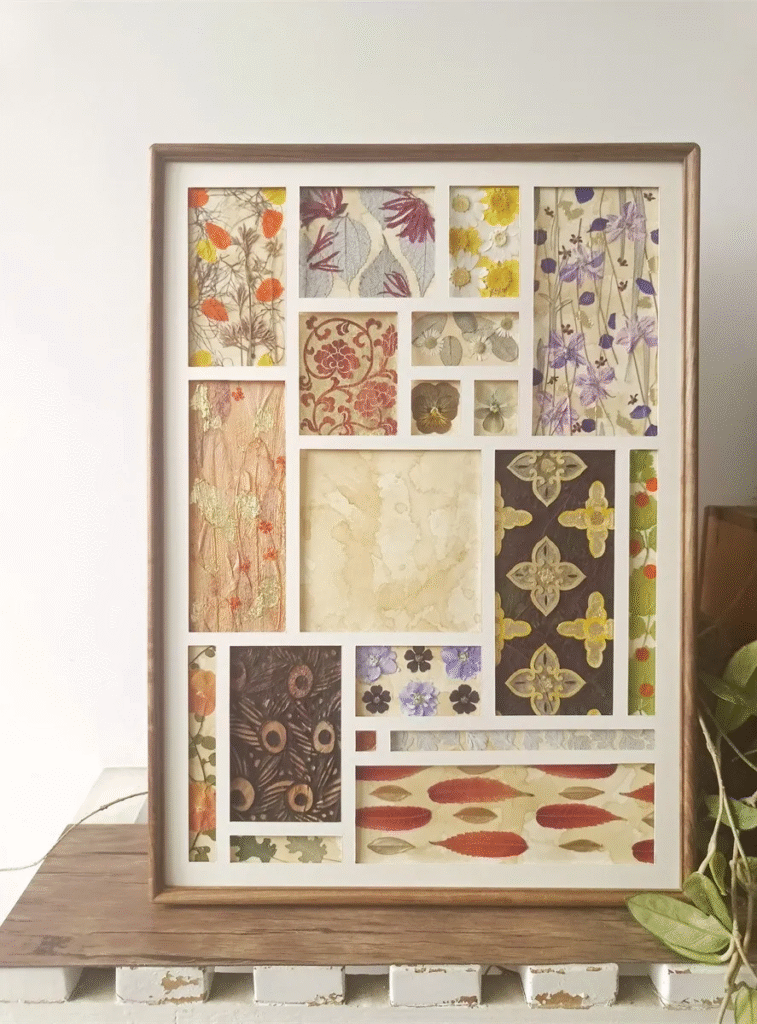
Another popular work does not belong to the traditional pattern series. It is a redesign of the specimen-style embossed work. “Inspired by the layout of American artist Janet Stever’s works, I attempted to divide the picture into several square small spaces and fix plant specimens in each independent space. The overall layout of the picture is neat and uniform, while the natural plant forms in each unit cell weaken the stiffness of the regular space. The background paper combines the tea dyeing process, enhancing the handmade feel and retro tone.”
Picture
For more exciting content, click on “China Flower Industry News” ↑↑
2,Craftsmanship process, four steps to capture the texture and rhythm
The creative process of Yang A’dan’s embossed works mainly consists of four steps: draft design, material planning, part making and assembly and collage. The first step is to design the pattern draft. This step requires him to have a thorough understanding of various patterns and the cultural images they embody. Therefore, whenever he has the chance, Yang A’dan would immerse himself in museums and cultural heritage sites across the country, seeking as much new inspiration as possible and increasing his knowledge reserves.
After the draft design is completed, print it at the actual production size of 1:1. Then, based on the color plan of the draft, determine the embossing materials needed for each part and the corresponding quantity, and start the embossing process.
Yang Adan will try to limit his material selection to certain specific plants as much as possible, such as yellow ginkgo, orange sulfur cosmos, blue delphinium and black banana peels, to minimize the cost of trial and error and improve efficiency. Of course, he will also try some new materials to test their tolerance to glue and the difficulty of carving.
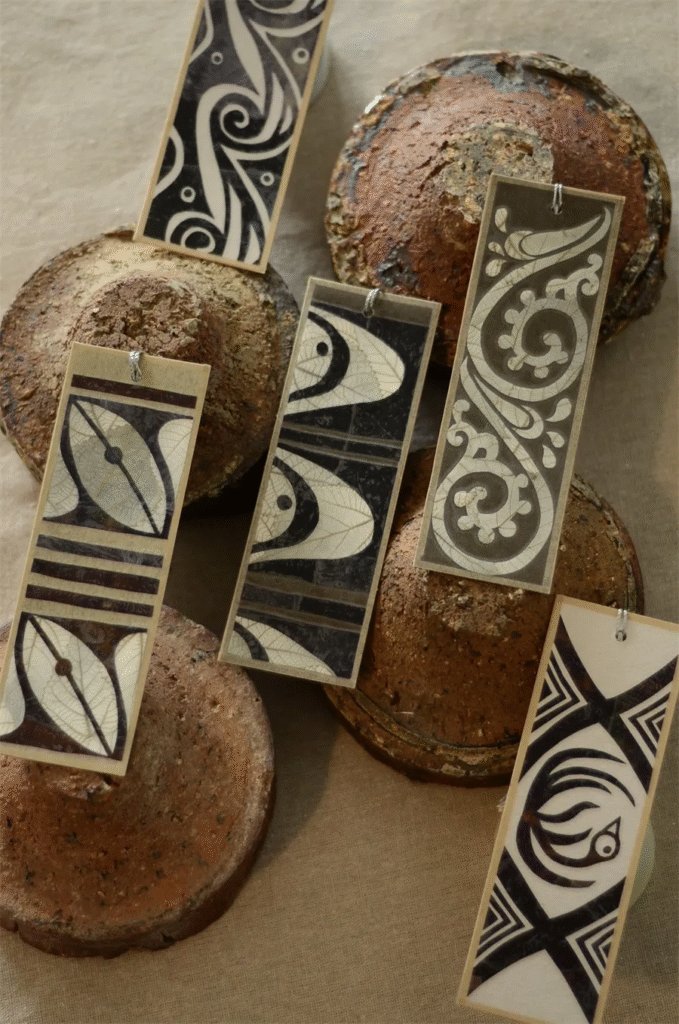
Pressed Flower Bookmarks
The third step is to carve out each “component” of the pattern according to the planning draft after the materials are ready. Depending on the characteristics of the plants, this step may involve the use of backing paper and thinning techniques. Backing paper can precisely define the shape of each component and provide a supporting carrier for delicate pressed flowers such as delphinium petals, facilitating subsequent carving. Thinning can make the color of certain transparent materials after pressing more vivid and prevent color contamination from the lower layers when multiple layers are stacked.
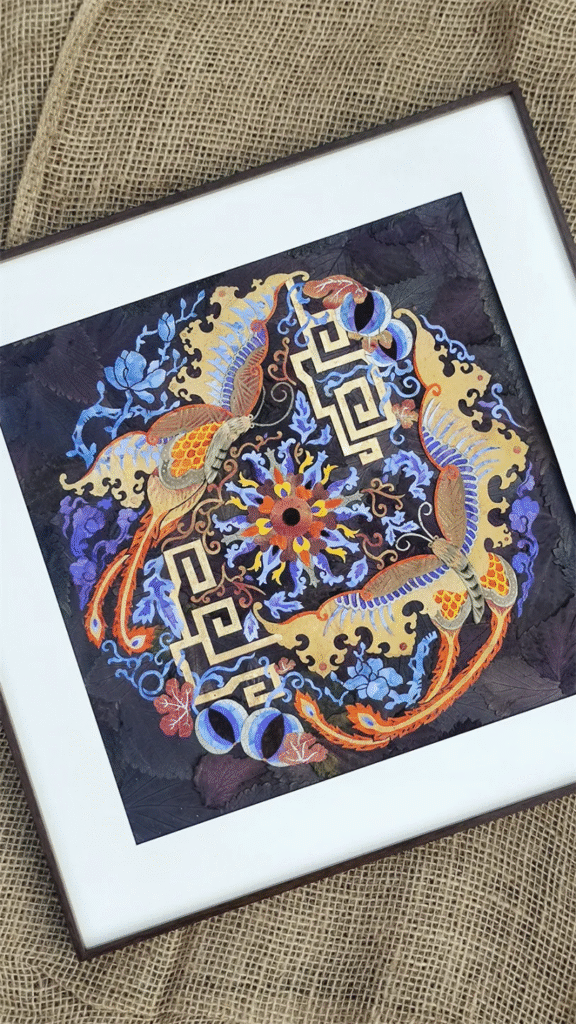
In the latest created pattern of “Joyful Reunion”, he attempted to use the bud scales of magnolia to represent the downy texture of the butterfly’s body.
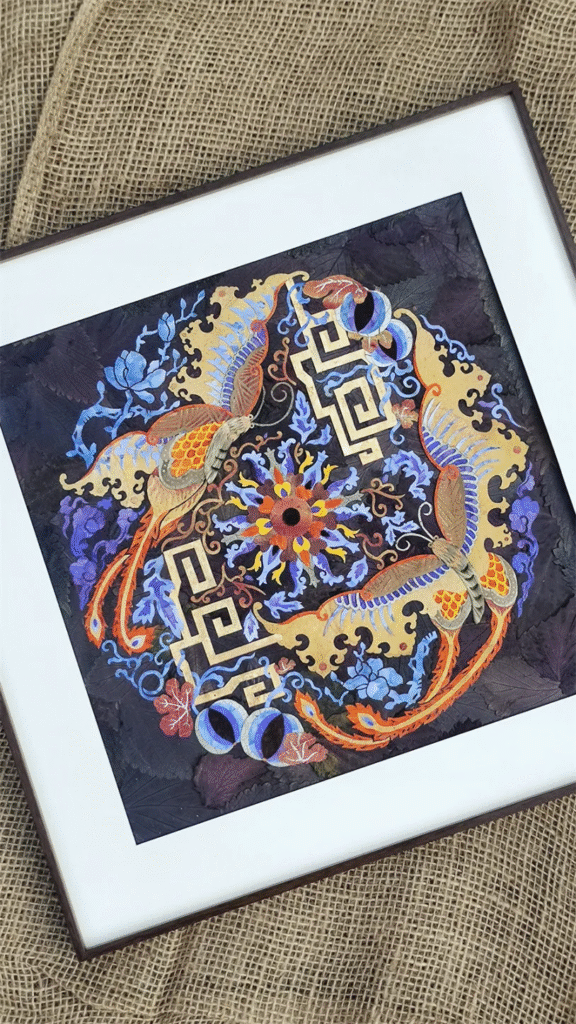
Picture of a Joyful Reunion.jpg
“Reunion of Joy”
The fourth step is to assemble and paste all the parts according to the drawing, and then fix them on the background paper.
03
Race against time, safeguarding colors
Pressed Flower Bookmarks 1.jpg
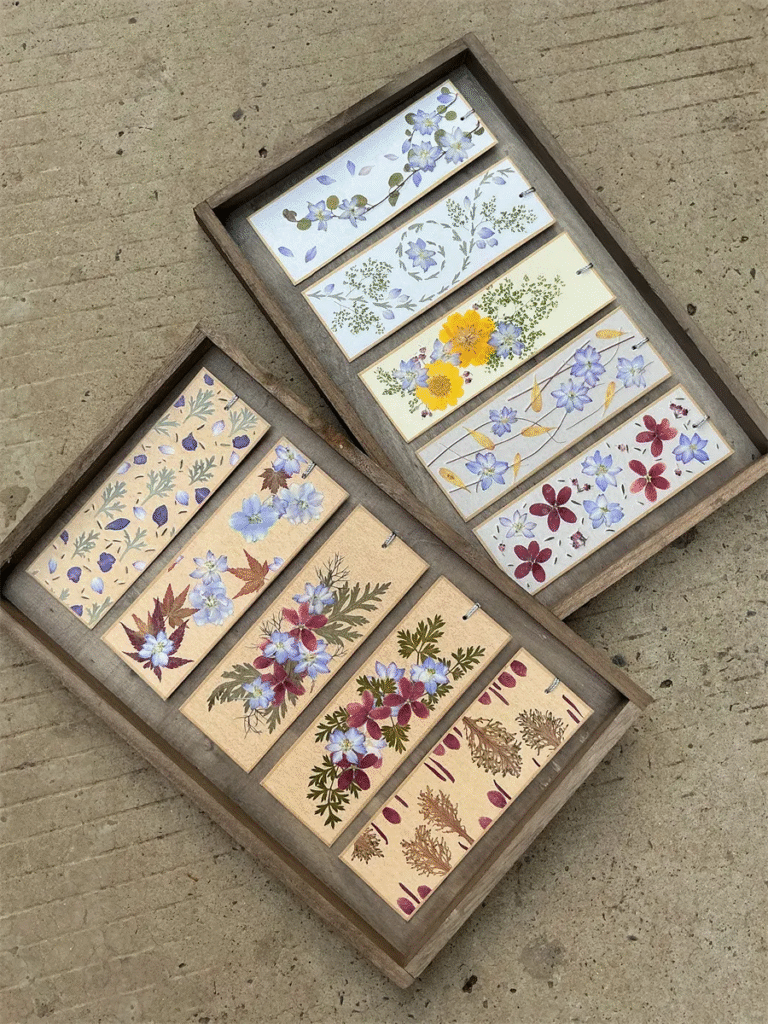
Pressed flower bookmarks
When creating traditional Chinese pattern embossing, plants are more often used as a pigment. “So I don’t overly adhere to the original form of the embossing materials. Under this technique, the most important aspects are the color itself, color fastness, the ease of obtaining the materials and their size,” Yang A’dan introduced. Because of this, green materials have become the “problem” he has been most eager to use but has never dared to use in large quantities – because chlorophyll is extremely easy to decompose, under the same conditions, green leaves are far more prone to fading than materials of other colors. “I have also tried chemical color fixation, and the effect was very good, but because the chemicals used are toxic and can easily pollute the environment, I haven’t deliberately operated it again.”
Color retention is the biggest challenge that Yang Adan’s works face. “When I select materials at the beginning, I try my best to choose those that are less likely to change color. I also don’t reject materials that have already faded or turned brown due to insufficient moisture retention during the pressing process,” he explained. Because they are also from nature and represent a stage in the life cycle of plants, some of the brownish colors are even hard to find substitutes for and can present unique and wonderful effects in the works.
Winter Guan with Phoenix Pattern from Fufeng County.jpg Picture
To prevent the fading of his works due to oxidation and moisture, recently he has started to vacuum mount each piece. “After vacuuming, the works can be more flat and sealed from oxygen and water vapor, thus preserving the colors to the greatest extent possible,” Yang A’dan emphasized. Even with vacuum mounting, it cannot guarantee that the pressed flower works will never fade. “Pressed flowers are also alive. The natural color changes can be regarded as the continuation of the plant’s life, which is inevitable and unchangeable. All we can do is cherish and appreciate them, and accept all the changes given by time with equanimity.”
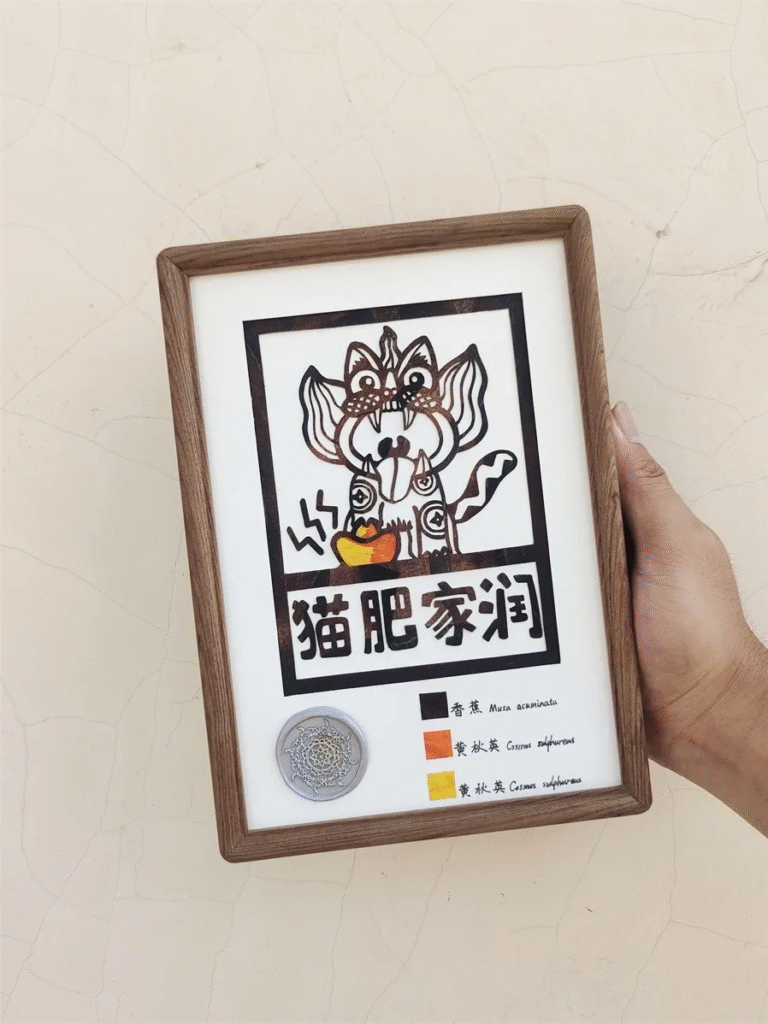
Facing the material challenge, Yang A Dan demonstrated innovative ingenuity. Bananas are fruits that oxidize and turn black very easily, while in embossed materials, rich black materials are not so readily available. “I tried perilla leaves, but after pressing, the leaves were extremely brittle and not suitable for carving and cutting. I also tried the skin of purple eggplants, but it was very difficult to obtain large, intact, and thin pieces.” So, he took advantage of the easy oxidation of bananas, scraped off the excess parts of the banana peel, and then froze it, finally obtaining a large amount of readily available and excellent black material. Yang A Dan also told the reporter: “The texture of the banana itself and the faint brown color when it is not completely oxidized are particularly outstanding when imitating wood grain and are the preferred material for making stained glass patterns.”
Picture of Suzhou-style magnolia flower window.jpg
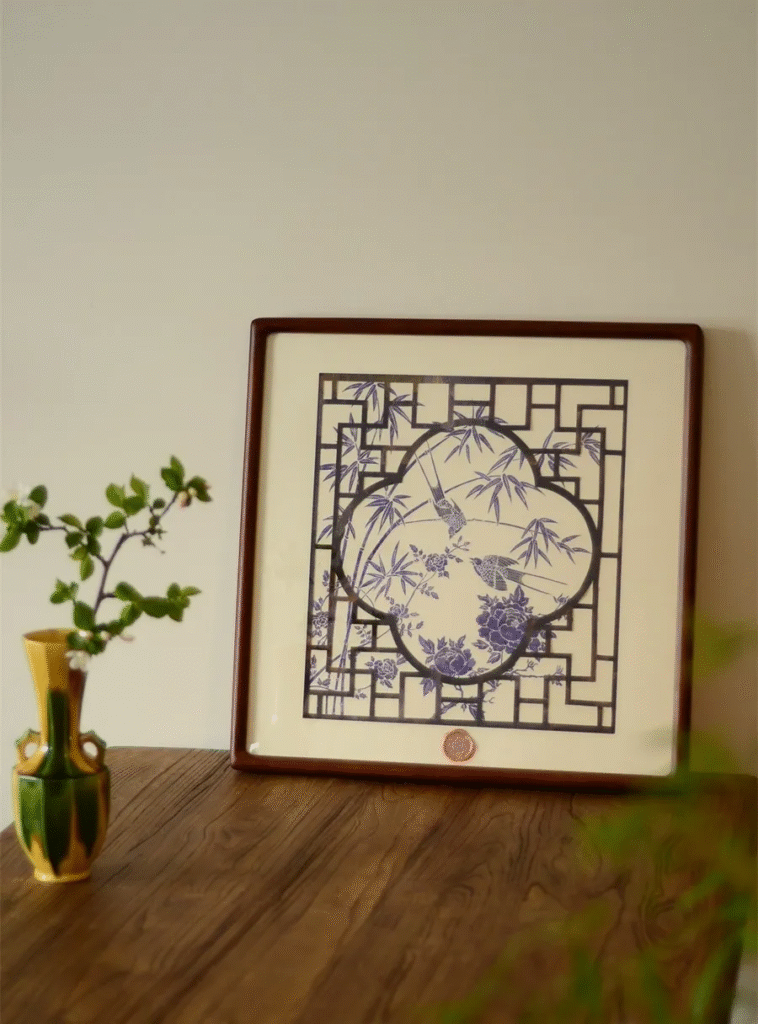
04.
Technique, texture, and quality, creating a style signature.
When it comes to personal style, Yang Adan believes that “using embossing techniques to showcase traditional Chinese patterns” is his most distinctive feature. The natural forms of plants are no longer his main concern, but their textures and qualities are meticulously preserved. “This is actually embossed, I thought it was painted,” such comments are regarded by him as a great affirmation. It is precisely these plants that have lost their original state but retain their natural textures that add intriguing details to the works and enrich their layers.
Photo by Agu 3: Stone Carvings at Yangtai Palace, Jiyuan.jpg
Yang Adan admits that the production of his traditional pattern series is complex, so the creation speed of his works is much lower than that of most pyrography artists. “But I still dream that my works can be seen, loved and recognized by more people, and let everyone discover that ‘pyrography can be played in this way’. This series of works is not only a promotion of pyrography art, but also a new exploration of Chinese traditional culture. I hope my efforts can inject more cultural confidence into the field of pyrography.” Currently, Yang Adan is still trying to create some pyrography works that are more traditional in style to enrich his portfolio and expand his audience.
Agu Photo 7: Yangshao Colored Pottery Bookmark.jpg
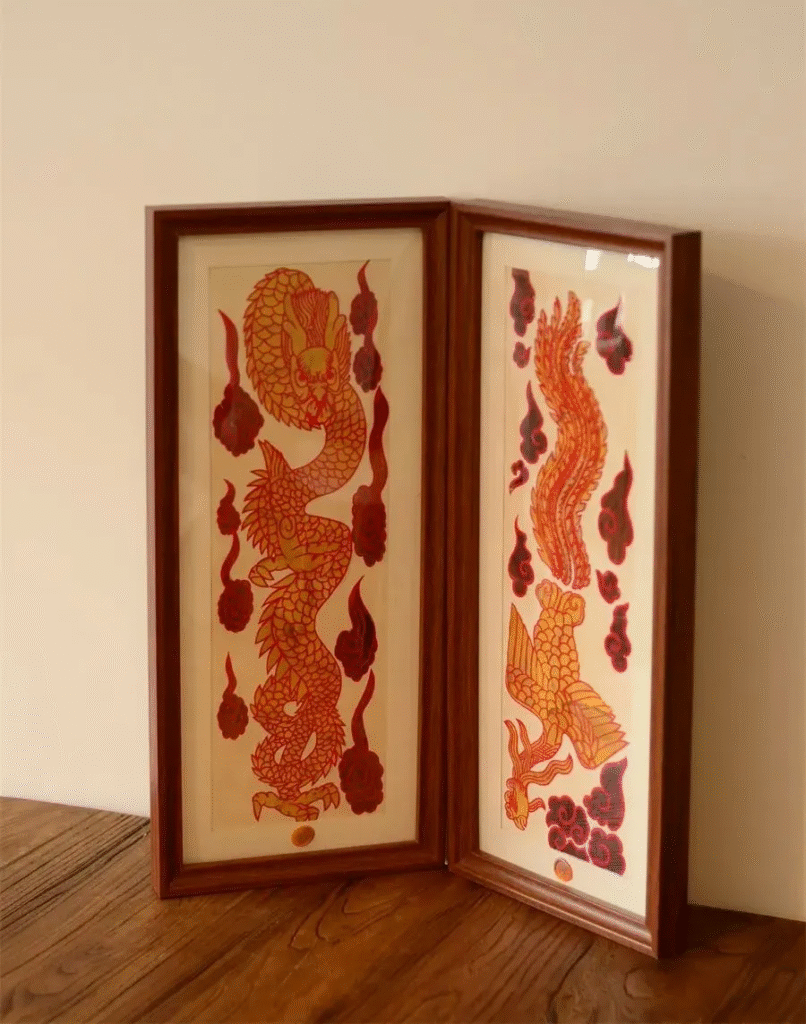
For me, perfecting every piece of work and satisfying every customer is far more important than pursuing popularity and fan base. Maybe this idea is very risky in the era of traffic, and it may even be destined that I will remain unknown. But I hope that one day my works can be like those of my admired teacher, always imitated but never surpassed. Yang Adan sincerely expressed his creative attitude.
Finally, Yang A Dan stated: “Chinese traditional culture is a great treasure trove around us, containing numerous elements worth exploring, developing, learning from and drawing upon. Traditional patterns are just a part of it. I believe that friends from all walks of life can find nourishment for themselves in the rich traditional culture.”