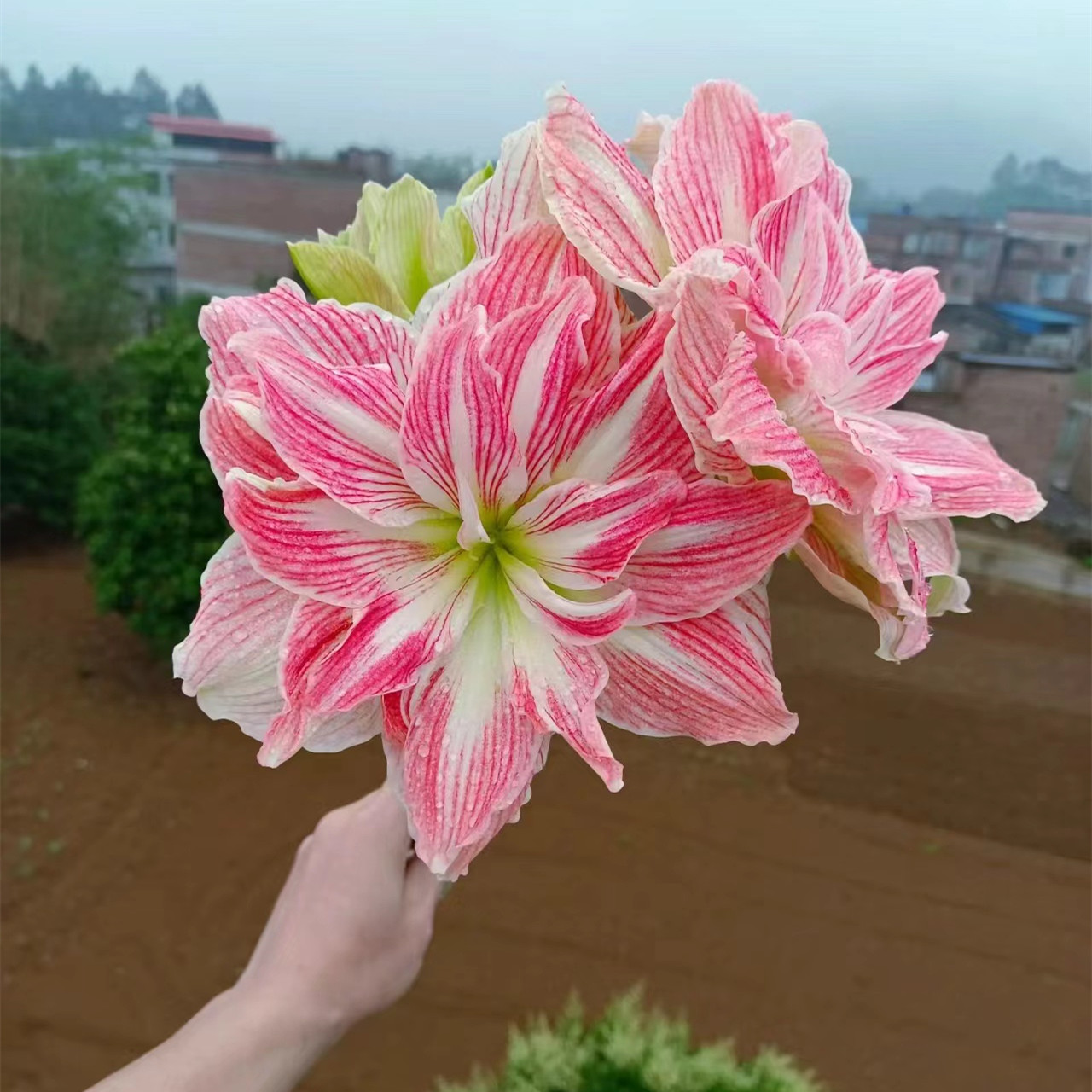
July is just around the corner, and the blooming period of Hippeastrum is coming to an end. From now on, the leaves will grow vigorously, and it will enter the “foliage appreciation” stage. How should we take care of Hippeastrum without flowers? Can we just leave it alone? Of course not. Whether Hippeastrum can multiply and bloom again in the future depends entirely on how well the bulbs are cared for during this period. This article summarizes four issues regarding the care of Hippeastrum in summer, hoping to be helpful to everyone.
01 What kind of fertilizer should be applied?
After the blooming period of Hippeastrum, the most important thing is to nourish the bulbs to make them grow larger, so that they can produce more offspring and bloom more in the future. To nourish the bulbs, it is necessary to apply more fertilizers rich in nitrogen and potassium. Nitrogen can promote the growth of leaves, while potassium can promote the expansion of bulbs and the growth of roots. For example, the root-stimulating fertilizer of Qian Bai Ji contains a large amount of nitrogen and potassium, as well as organic small molecules, which can work together to stimulate the growth of bulbs, roots and leaves. Note: When the temperature exceeds 35 degrees in summer, it is easy to cause fertilizer damage. At this time, apply less fertilizer or suspend fertilization.
02 Should the leaves be pruned or not?
During summer, the leaves of Hippeastrum grow very fast. If they lack sunlight, they will become long, messy and crooked, which can drive people with obsessive-compulsive disorder crazy. At this time, for aesthetic purposes, you can trim the leaves a little, but do not cut them all off. The leaves are an important part for Hippeastrum to carry out photosynthesis and produce nutrients. The nutrients produced will be supplied to all parts of the plant for growth, including the bulbs. If all the leaves are cut off, Hippeastrum will lose an important source of nutrients and how could it grow strong?
- Should it be exposed to the sun?
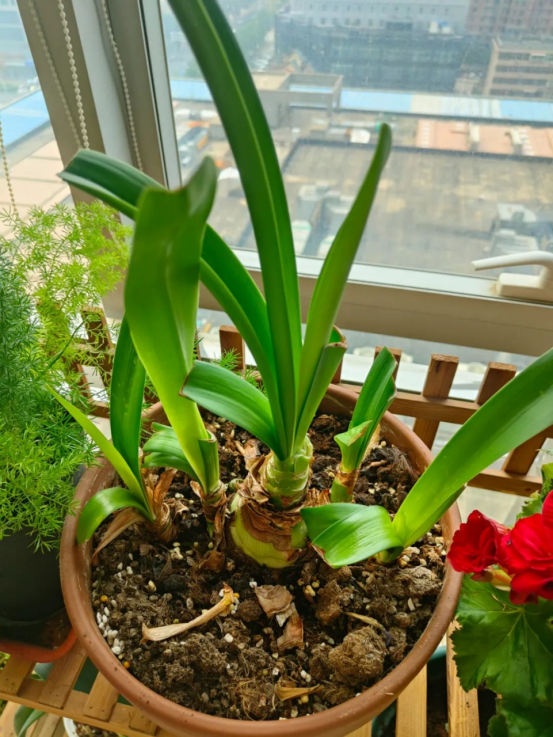
This is a must! Hippeastrum is very hardy and not afraid of the sun. In summer, it should be given as much direct sunlight as possible. It’s best to place it in the yard for open-air cultivation. Only in this way can the bulbs grow and expand quickly, and the leaves will be wide and shiny. If there is a lack of light, photosynthesis cannot take place to produce nutrients, and the nutrients stored in the bulbs will be consumed. Not only will the leaves of Hippeastrum turn yellow and become thin, but the bulbs will also become smaller and smaller. Note: For Hippeastrum grown on the balcony, keep it a little farther from the window glass. Glass has a heat-concentrating effect, and the sunlight passing through the glass will be more intense, which can easily burn the leaves.
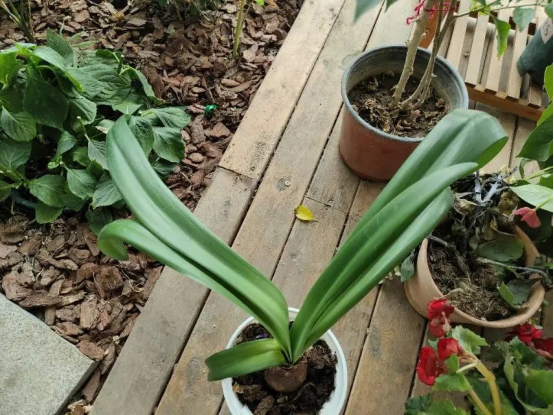
Lack of light causes the leaves to grow excessively.
- Should the outer skin be removed?
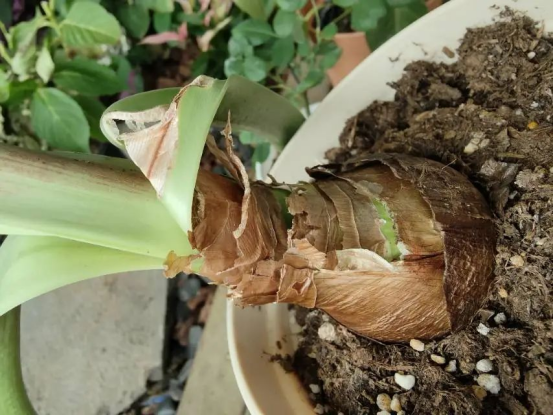
Flowering consumes a lot of nutrients, and the bulbs will become shriveled from their previous plump state, with a large section feeling hollow when squeezed. At this point, may layers of withered outer skin appear on the bulbs, and flower enthusiasts can’t resist the urge to remove them all. In fact, it’s not recommended to peel off all the dry outer skin. Their presence can protect the fresh inner bulb. If they are all removed, the fresh and moist inner bulb will soon dry out. If this continues, the bulbs will be completely peeled away.